Graphic Recording vs Graphic Facilitation: what’s the difference?
These terms get muddled up all the time - even by people DOING them 🤪. I've had clients ask for "graphic facilitation" when they meant graphic recording, and vice versa. Event planners use them interchangeably. Job listings mix them up.
I promise, they're completely different services. And hiring the wrong one might mean that you don't get what you need.
Here's the difference, and how to figure out which one your event needs.
The Core Difference
Graphic recording is documentary. The practitioner captures what's being said without directing the conversation. They're a visual witness.
Graphic facilitation is participatory. The practitioner actively shapes the conversation, using visuals as a tool to guide group thinking.
Same skills.
Graphic Recording Explained
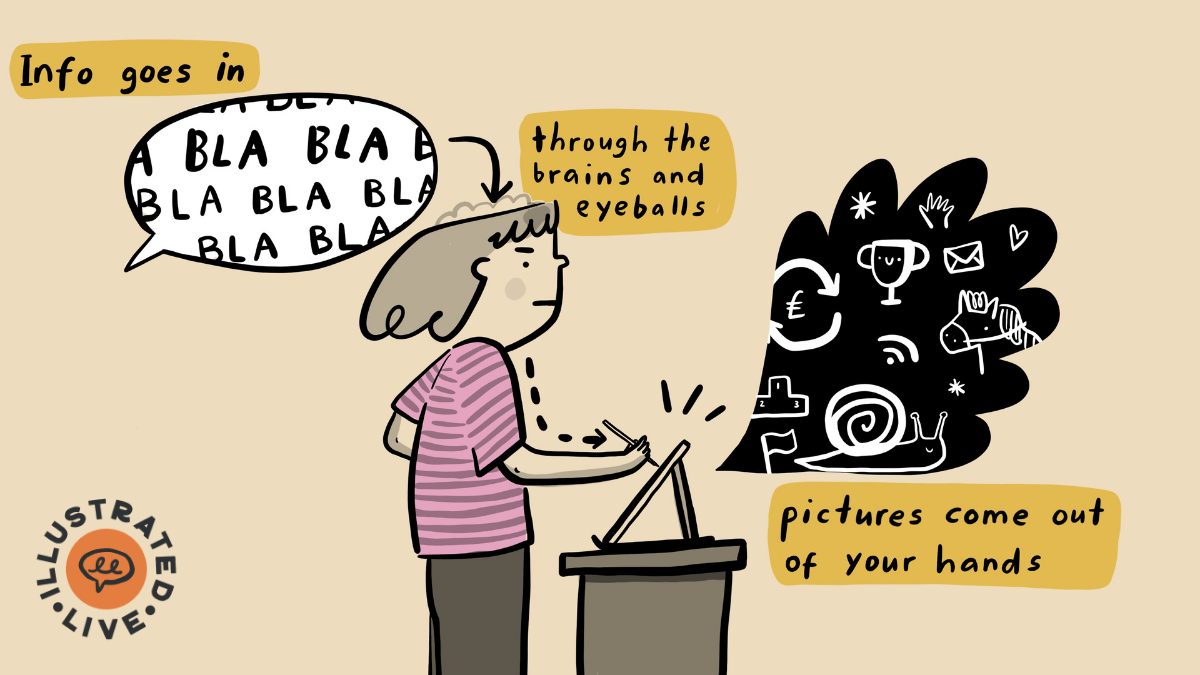
A graphic recorder listens, synthesises, and translates spoken content into visuals, but doesn't direct the conversation. They’re like a fly on the wall, capturing what’s going on in the room.
It’s a bit like a documentary filmmaker. They're in the room, paying close attention, making choices about what to focus on, buuuut they're NOT telling people what to say or structuring the meeting.
What it looks like in practice:
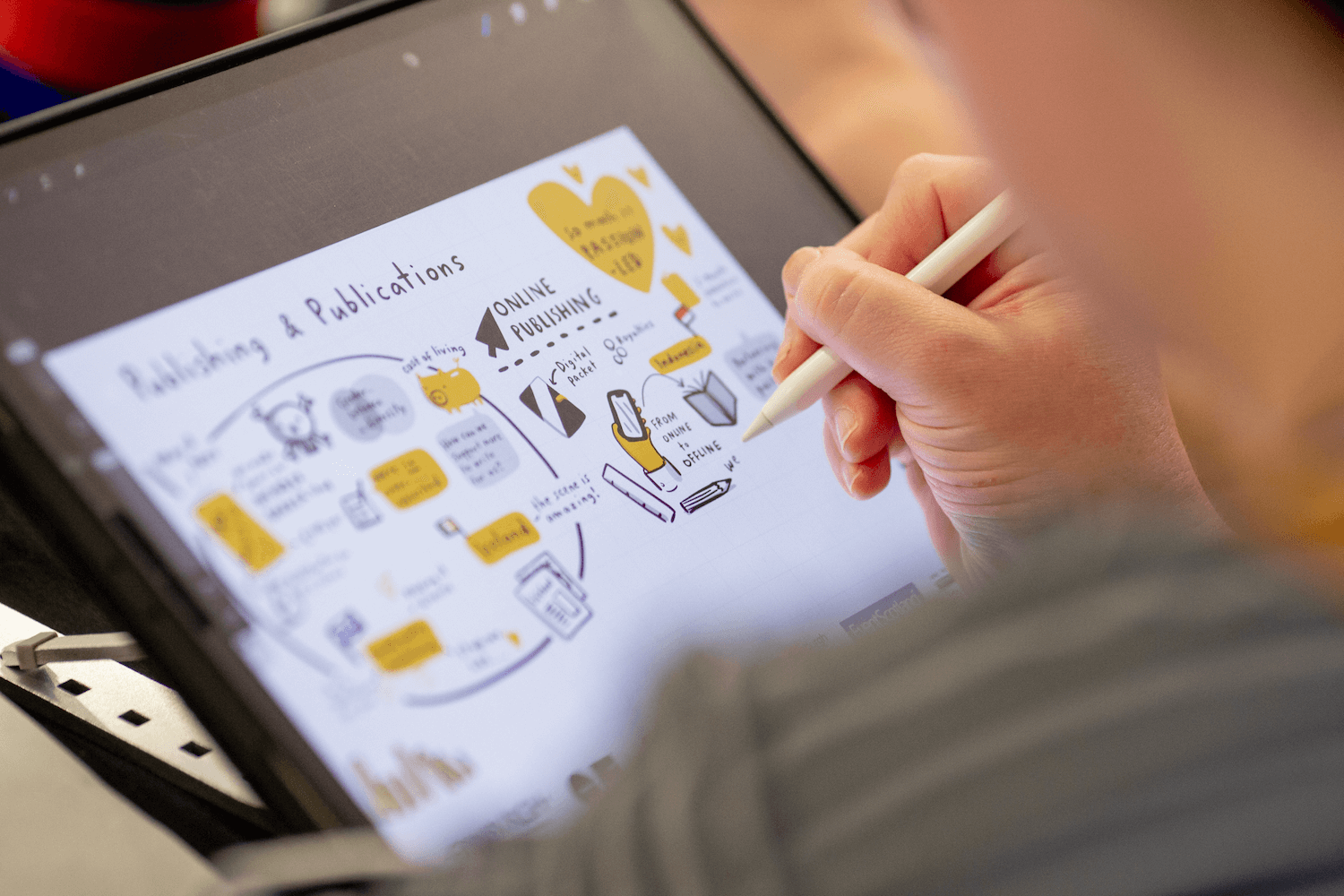
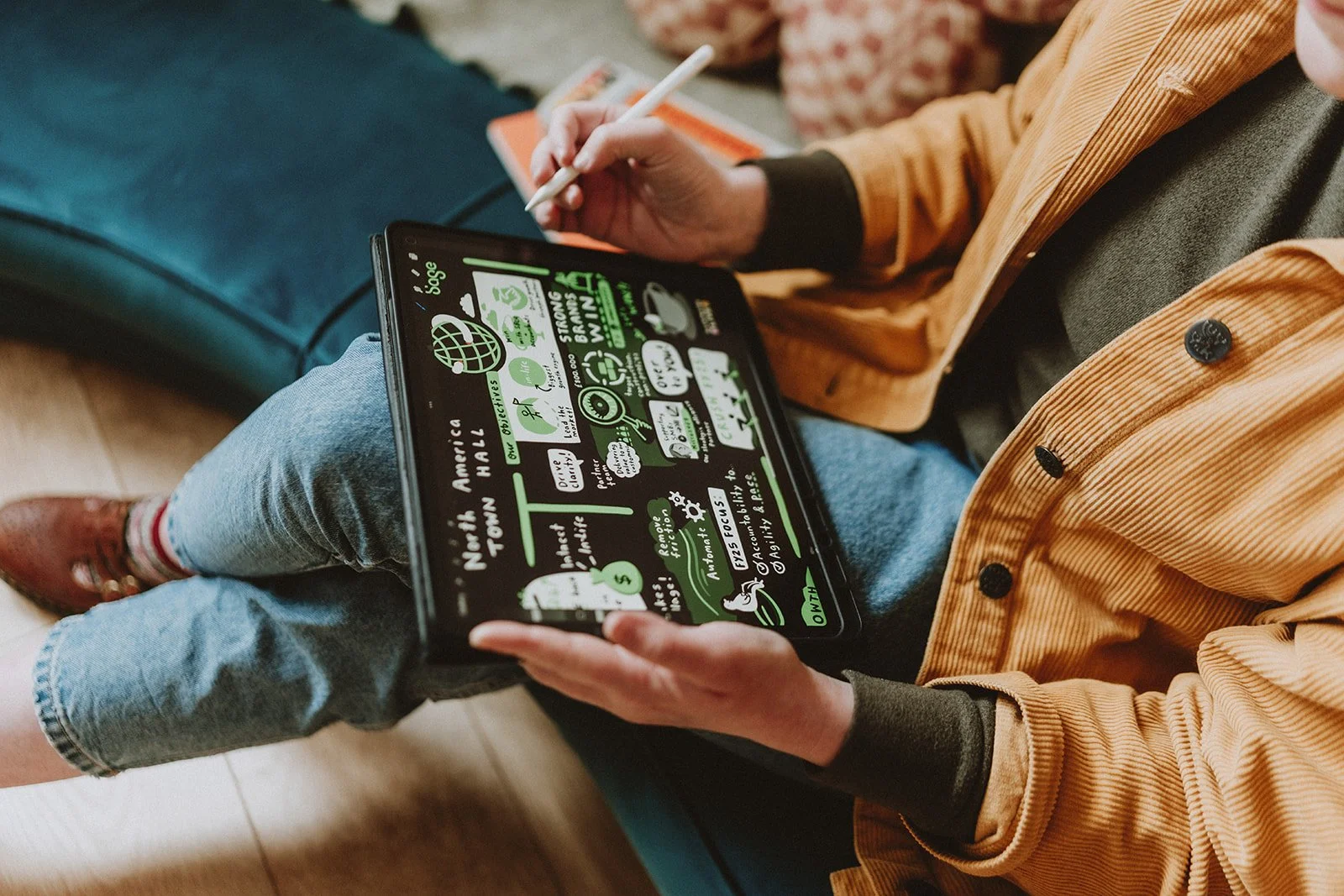
The graphic recorder stands at a large paper surface or works on an iPad while a speaker presents or a panel discusses. They listen for key themes, memorable phrases, and important ideas, then translate those into a visual summary in real-time.
The audience might watch the drawing emerge. The speaker keeps presenting. The recorder doesn't interrupt or redirect.
In my experience in graphic recording, the closest we get to any speaking = discussing what we’ve drawn / reflecting back to the group what we’ve heard at the end of a session.
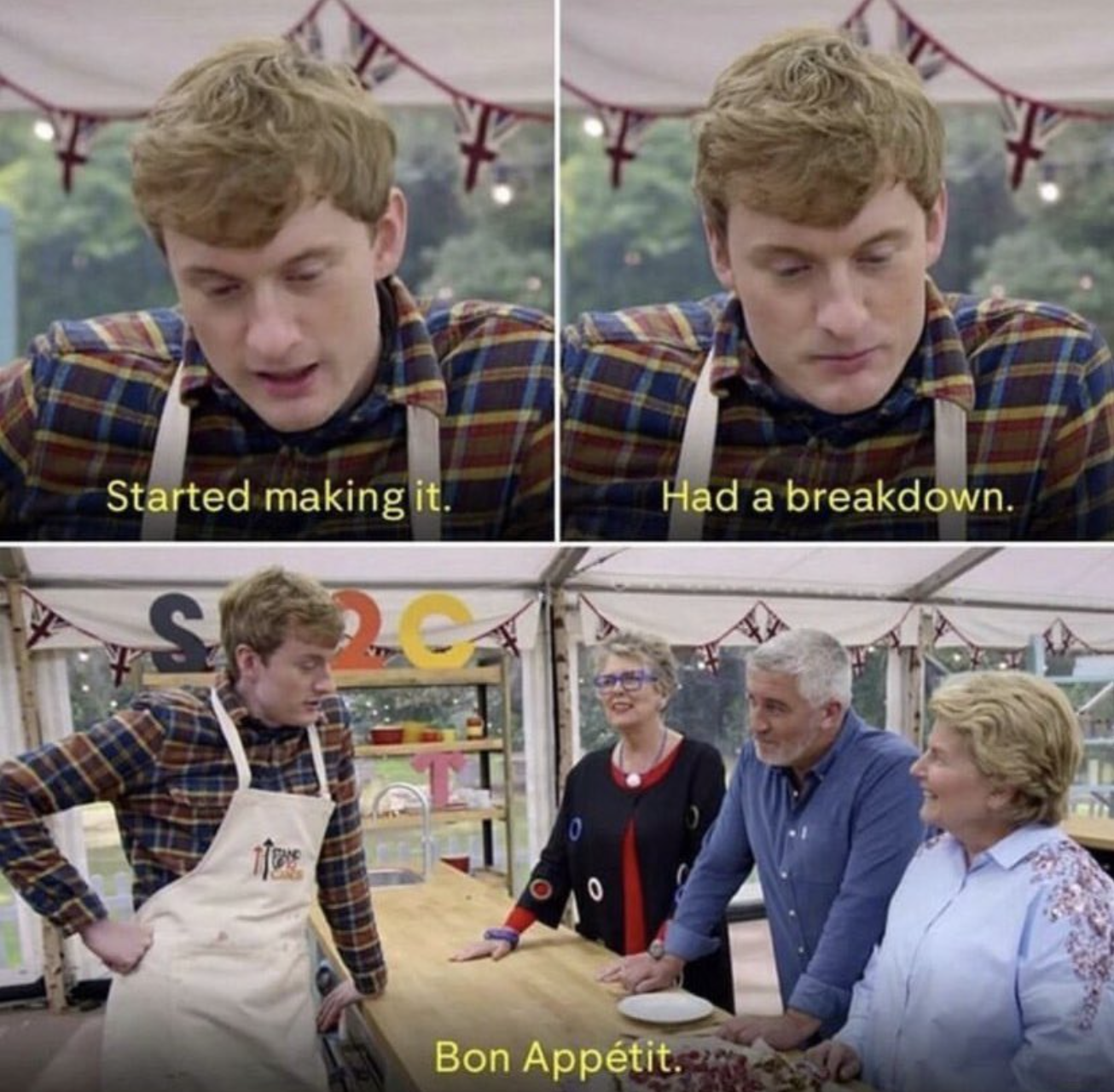
This is what it feels like sometimes 🤣
The output: A visual summary of what was said: a big ol’ illustration that captures the key ideas, themes, and moments from the session.
Best for:
Keynote presentations
Panel discussions
Conference sessions
Lectures and talks
Any event where content is being delivered to an audience
Graphic Facilitation Explained
A graphic facilitator does everything a recorder does - but ALSO actively shapes the conversation. They're not just capturing; they're guiding. It blows my mind that people can do both things, but their output tends to be a bit more basic.
Think of it like a documentary filmmaker who's also the interviewer. They're still making visual choices, but they're also asking questions, redirecting discussion, and helping the group reach conclusions.
What it looks like in practice:
The graphic facilitator might stand at a whiteboard or large paper surface while a team works through a problem. They capture ideas visually, but they also ask clarifying questions: "So if I'm hearing this right, the main tension is between X and Y?" They might synthesise aloud: "It sounds like there are three options on the table." They help the group see patterns in their own thinking.
The visuals become a tool for the group to think with — not just a record of what was said.
The output: Visual artefacts that helped drive the conversation, plus a record of where the group landed. Often includes frameworks, decision trees, action items, or strategy maps that emerged through the session.
Best for:
Strategy sessions
Team workshops
Brainstorming and ideation
Decision-making meetings
Conflict resolution
Alignment sessions
Any event where a group needs to work through something together
When You Need Recording
Choose graphic recording when:
A speaker is presenting to an audience. The content is flowing one direction — from presenter to listeners. You want to capture it, not change it.
The content is pre-planned. The speaker knows what they're going to say. Your goal is documentation and memory, not discovery.
You want a visual record of what was said. Something shareable, memorable, and accurate to the original content.
The value is in capture and retention. You want attendees to remember the keynote six months later. You want social media content. You want a reference document.
Examples:
A CEO presenting the annual strategy
A thought leader giving a conference keynote
A panel of experts discussing industry trends
A training session delivering specific content
When You Need Facilitation
Choose graphic facilitation when:
A group is working together. The content emerges from discussion, not from a single presenter. Ideas are being generated, debated, refined.
The goal is alignment or decisions. You need the group to reach shared understanding, make a choice, or commit to a direction.
You want visuals to guide the process. Drawing = a thinking tool. The group references it, builds on it, argues about it.
The value is in the process, not just the output. What matters is that the group worked through something together, and the visuals helped them do it.
Examples:
A leadership team defining next year's priorities
A product team mapping user journeys
A workshop resolving tension between departments
A board session making a major strategic decision
Can One Person Do Both?
Yes - and many practitioners do!
The skills overlap significantly. Both require listening, synthesis, visual translation, and the ability to work fast under pressure. A good graphic facilitator can record. A good graphic recorder can often facilitate.
The role depends on what the client needs.
Some events blend both. A two-day offsite might include:
Day 1 morning: Keynote from the CEO → graphic recording
Day 1 afternoon: Team workshop on priorities → graphic facilitation
Day 2: Strategy session with breakout groups → graphic facilitation
Same practitioner, different hats throughout the event.
When hiring, be clear about what you need. If you want someone to capture a keynote, say so. If you want someone to help run a workshop, say that instead. Most practitioners will ask clarifying questions, but the more specific you are upfront, the better the match.
The Terminology Confusion
This field has accumulated a lot of names over the decades. Here's a quick decoder:
Geographic differences:
UK tends to use "visual" - visual recording, visual facilitation
US tends to use "graphic" - graphic recording, graphic facilitation
Other terms you'll encounter:
Scribing - generally means graphic recording (common in the MG Taylor tradition)
Live illustration - graphic recording with emphasis on the illustrative style
Visual note-taking - can mean professional graphic recording or personal sketchnoting
Sketchnoting - usually personal visual notes, popularised by Mike Rohde
What I use: I tend to say "live illustration" with clients because it's immediately clear. People understand "illustration" and "live" signals it happens in real-time. We have team members who can do both recording and facilitation, depending on what's needed.
The important thing: Don't get hung up on terminology. Focus on what you actually need. Is that someone to capture, or someone to guide? And then find the right person for that job.
Quick Reference Table

Summary
Graphic recording captures what's said. Graphic facilitation shapes the conversation.
Both use the same visual skills. The difference is the practitioner's role - witness or guide.
Most events need recording. Some need facilitation. Complex events might need both! (At different moments.)
When you're hiring, be nice and specific about what you need. And if you're not sure, you can always ask. A good practitioner will help you figure it out.
New to this whole conference artist illustrated notes at meetings thing?
Start with our complete MEGA guide including the full history of this fascinating job: What Is Graphic Recording?