
How to hire a live illustrator / conference artist for your event
Hiring a live illustrator for a corporate event can feel a bit mysterious if you’ve never done it before.
You might have seen the finished illustrations shared on LinkedIn or in a conference report and thought, “That looks brilliant… but how does it actually work?”
After illustrating hundreds of events for organisations including Google, Apple, Adobe, Netflix and the United Nations, I’ve learned a lot about what makes a live illustration project really successful.
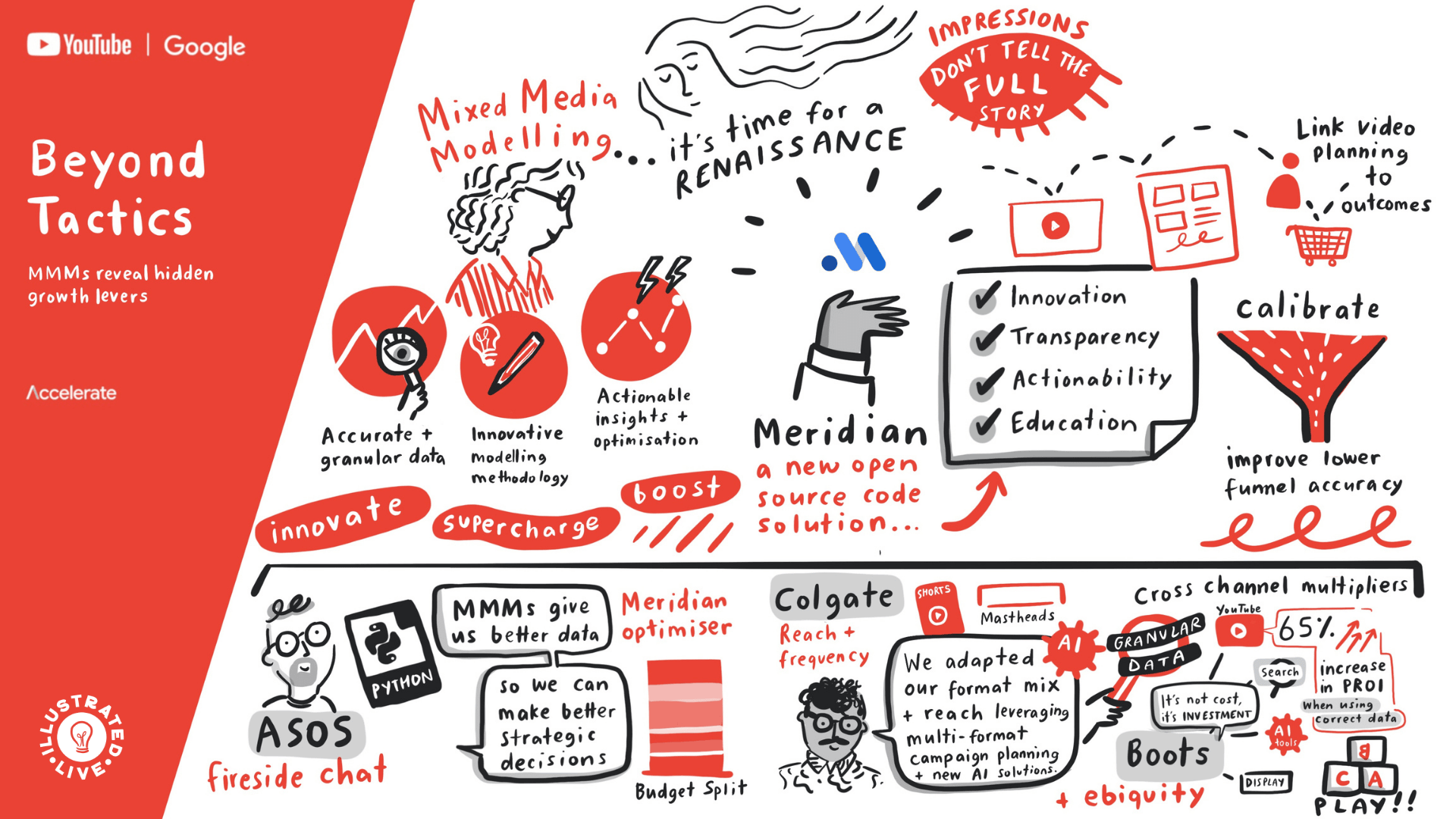
A finished live illustration from a corporate event for YouTube / Google. This visual summary was created to help Google’s advertising customers understand the value of accurate data and insights 🤓 (and revisit those notes after the event ended)
If you’re considering hiring a live illustrator for your event, here’s what to know. (And if you already know you’d like to work with a live illustrator for your event, you can find out more about live event illustration for conferences and corporate events.
What a live illustrator does at an event
A live illustrator (sometimes called a graphic recorder or visual scribe) listens to what’s happening in your event and translates the key ideas into a visual summary in real time.
Think of it as visual notes that everyone can understand at a glance.
People get to watch the illustration evolve during the event, and afterwards you’re left with a visual record that can be used in reports, social media, internal comms, and future planning.
Watching someone draw live is genuinely entertaining. But it’s also incredibly useful.
That’s why I think of live illustration as sitting somewhere in between engagement and communication. It brings a load of fresh, creative energy to the room while also creating something practical and sensible your team can use long after the event ends.
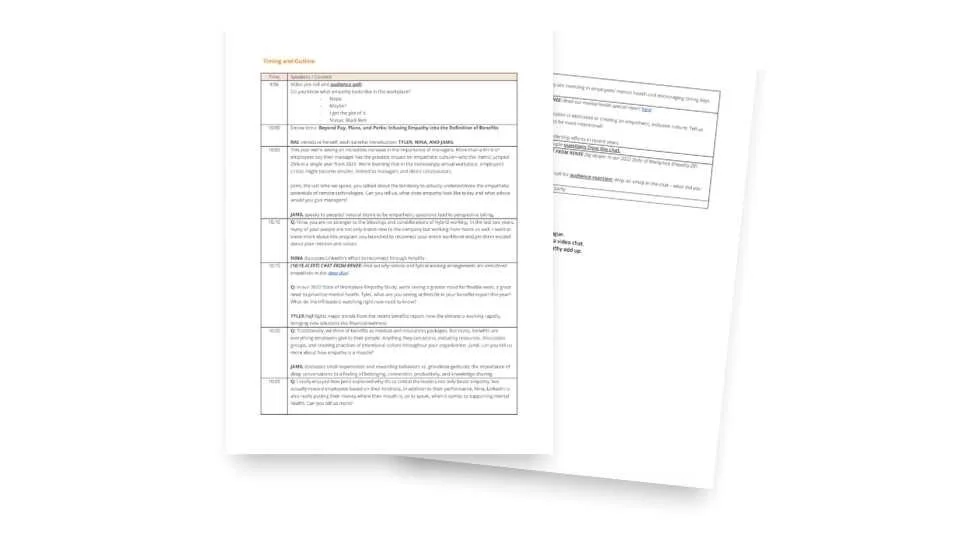

Visual notetaking…before and after!
The same meeting captured as written notes versus live illustration. Visual notes make complex discussions easier to revisit later.
What actually happens when you hire a live illustrator
Every illustrator works slightly differently, but this is what the process usually looks like when clients work with us here at Illustrated Live.
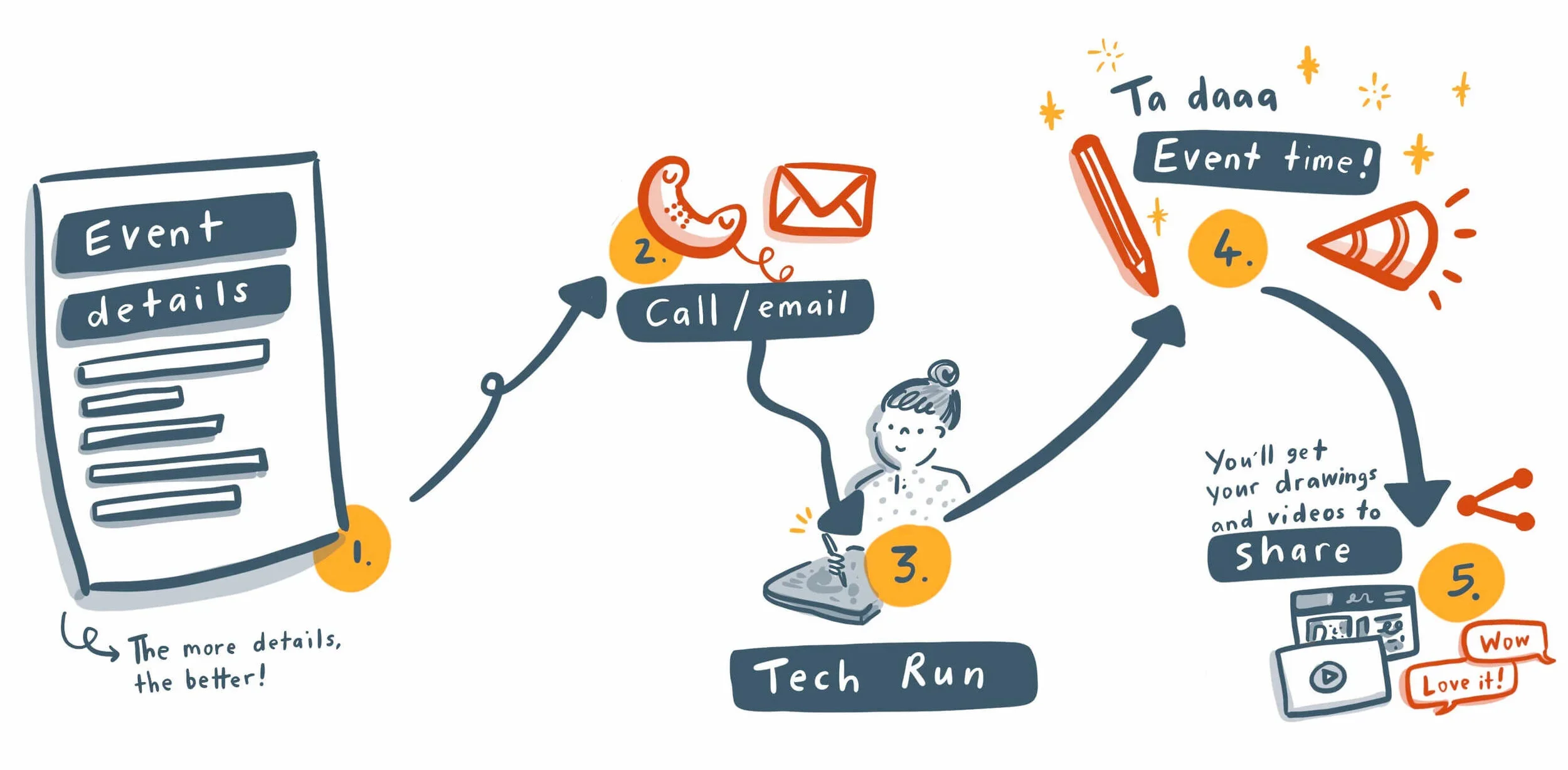
1. Initial enquiry
The first step is nice and simple. You send an enquiry with the event date and a bit of context about what you’re planning. You can either fill in a form on the contact page, or email directly hello@katiechappell.com - whichever’s easiest.
I always share pricing upfront before we book a call. Everyone is busy, and there’s no point wasting time if the budget isn’t aligned.
If it looks like a good fit, we jump on a quick call to talk through the event in more detail.
2. Clarifying the goals
One of the most helpful things a client can tell me is:
What do you want people to feel or remember after this event?
I don’t usually need your entire slide deck. What matters more is the outcome you’re hoping to achieve.
For example:
• Do you want people to feel inspired?
• Is there a key cultural message you want to reinforce?
• Are you mapping out strategy or celebrating progress?
Once we know the goal, the illustration can be designed around that.
3. Preparation
Before the event we do a bit of prep.
This might include:
Researching unfamiliar terminology or acronyms
Creating a colour palette based on your brand guidelines
Planning the layout using your event agenda
The agenda is surprisingly useful here. If an hour session has three segments, we might visually divide the page into thirds so the illustration reflects the flow of the discussion.
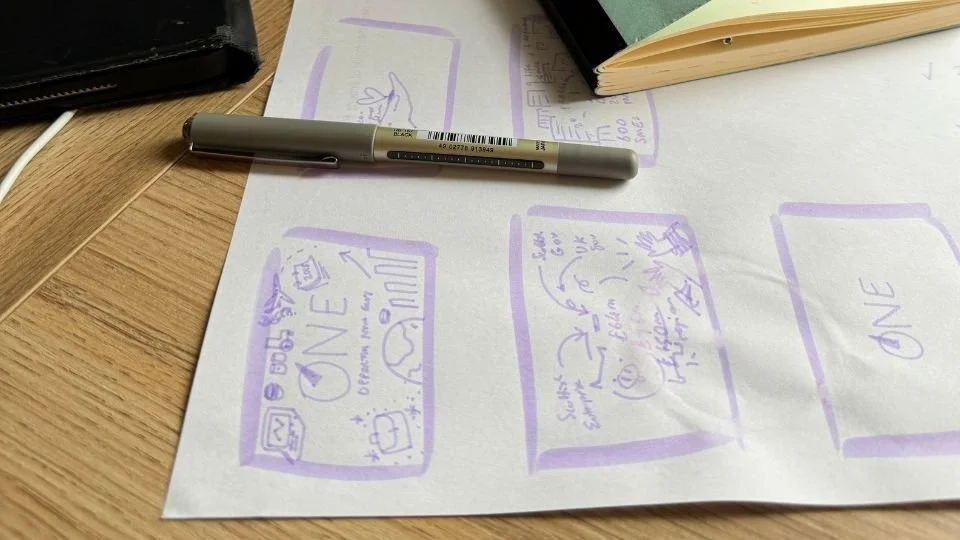
Before the event we plan colour palettes and layouts so the illustration fits your brand and agenda. This sketch shows general layout ideas (we work digitally, so the colour palette is created digitally as well.)
4. During the event
Most of my work is live illustration for events conferences and workshops, using an iPad connected to your event platform (Zoom, Teams, etc.).
There are a few different ways clients like to present the illustration during the event. My favourite is the Illustrated Live “ham sandwich” method™️:
First slice of bread: I introduce myself at the start and explain that I’ll be illustrating the event.
The ham: halfway through we check in and show progress.
Final slice of bread: at the end we reveal the finished illustration.
That’s exactly what Purina did when I live illustrated in-person at their hybrid roundtable event in Helsinki, Finland.
Click play to see the timelapse video above - it shows the illustrations appearing SUPERFAST.
5. Immediate delivery
One thing clients often appreciate is how quickly they receive the finished files.
Within about 15–30 minutes of the event finishing, you’ll receive a shared folder containing:
The final illustration (JPEG)
A timelapse animation of the drawing process (MP4)
An accessibility description for screen readers
That means you can start sharing the artwork almost immediately.
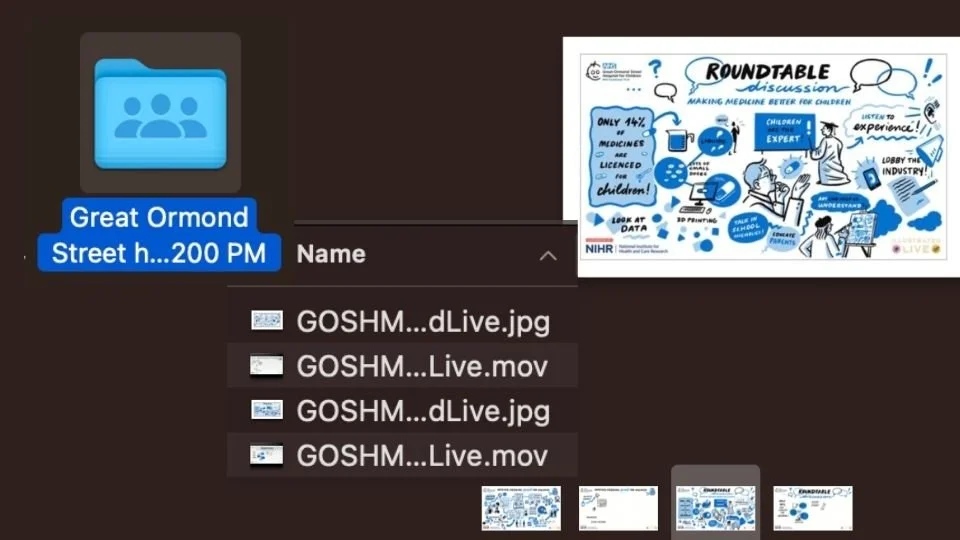
Great Ormond Street didn’t request a visual description for their event, but if they had, it’d be on this screenshot 😅
Real examples of how organisations use live illustration
Live illustration is used in lots of different ways depending on the event.
Strategy and planning sessions
I once illustrated an event for National Trails where the organisation was reflecting on a major project and planning their next steps.
The illustration captured:
what they had achieved
what they wanted to do next
They later used the artwork as a visual reference in future meetings so teams could instantly see the bigger picture without digging through pages of written notes.
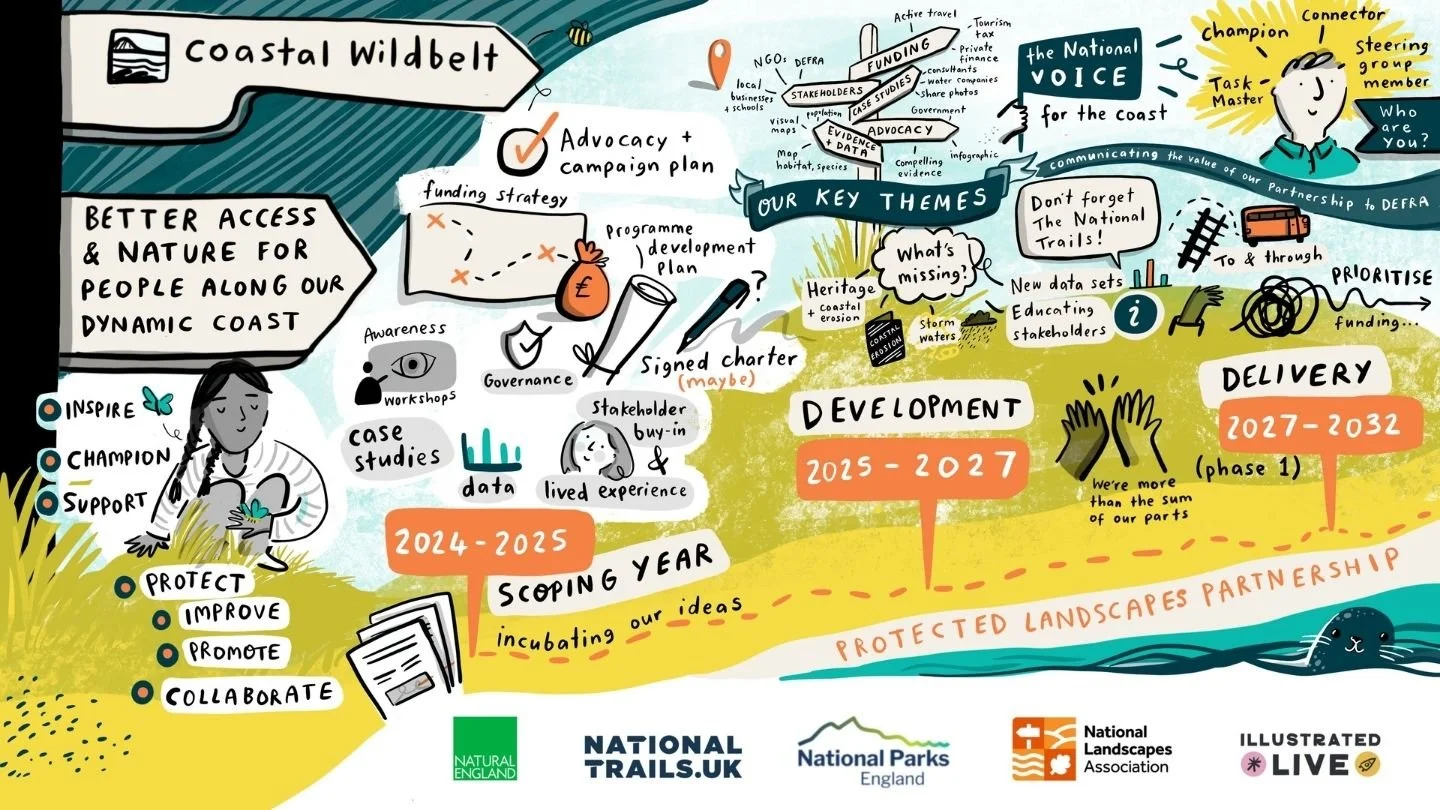
National Trails UK used their live illustration as a reference for future planning meetings.
Corporate strategy workshops
Another example was a large financial institution running a deep strategic session.
They were working through a full SWOT analysis (strengths, weaknesses, opportunities and threats) as part of a five-year strategy.
The illustration mapped the whole conversation across multiple pages and helped bring everyone onto the same page.
Afterwards it was shared internally so teams could revisit the strategy visually.
I would LOVE to share but that project had a big NDA on it. Top secret. 🕵️ 👀

*TOP SECRET VISUAL NOTES*
Common mistakes when hiring a live illustrator
There are a few things I see event organisers struggle with.
Making the illustration too visible (or not visible enough 🤪)
Some organisers worry the illustration will distract people, so they hide it completely.
Others project it huge on the screen the entire time, and it can be overkill.
Both can work, but usually the sweet spot is somewhere in the middle. Let the speakers shine during the session and reveal the illustration at key moments! Plz review the ham sandwich methodology at the start of this blog.
Choosing purely on price
Budgets matter. But with live illustration, you’re trusting someone to interpret your event in real time.
It’s worth choosing someone whose work you genuinely like and whose experience matches the kind of event you’re running.
It can be worth looking into offering live illustration as a bonus to your sponsors - it gives lovely solid ROI. You can read more about how to give your event sponsors real value via live illustration here.
Booking too late
Good live illustrators are often booked well in advance.
Occasionally, someone emails two days before an event with a £250 budget. Unfortunately that isn’t workable.
For context, a professional half-day booking in person is typically around £1,500 + VAT or more, depending on the project and licensing. Our minimum booking is £750 + VAT.
Some clients even budget for illustration years in advance as part of research or funding bids.
How to choose the right live illustrator
If you’re hiring for the first time, here are a few practical tips.

✔ Clear handwriting
✔ Real event examples
✔ Experience in your sector
✔ Brand colour use
✔ People drawn well]
Study their portfolio carefully
Look for:
Work from similar industries or event types
Illustration styles you enjoy
Clear, legible handwriting
Examples of real events rather than conceptual pieces
Ask about experience
You can usually tell if someone is experienced by the clients they’ve worked with and the events they show in their portfolio.
Some organisers also ask for references from past clients, which I’m always happy to provide.
Clarify the practical details
Before booking, make sure you’ve agreed:
Event timings and time zones
Delivery timeline for final files
Licensing and usage rights
How the illustration will be displayed during the event
| Question to ask | Why it matters | What a good answer looks like |
|---|---|---|
| Do they have real corporate event examples? | Corporate events need fast listening, clear thinking, and confidence in a professional setting. | A portfolio with conferences, panels, workshops, strategy sessions, or research events. |
| Is their handwriting easy to read? | The final artwork needs to be useful afterwards, not just nice in the moment. | Clear lettering that is legible even when the artwork is viewed smaller on screen. |
| How quickly do they deliver the final artwork? | Many organisers want to share the artwork the same day. | Files delivered within minutes or hours, not days later unless agreed in advance. |
| What usage rights are included? | You may want to reuse the artwork in reports, slides, internal comms, or social media. | A clear licence that explains exactly how the artwork can be used. |
| Have they worked with similar organisations or topics? | Relevant experience helps with tone, terminology, and confidence. | Examples from your sector, or clear evidence they can handle complex subject matter well. |
Remember: it’s collaborative!
Hiring a live illustrator can feel nerve-wracking because it happens live.
But digital illustration is incredibly flexible. If something needs adjusting, it’s usually quick and easy to edit.
The goal is always the same: making sure you’re over the moon with the result.
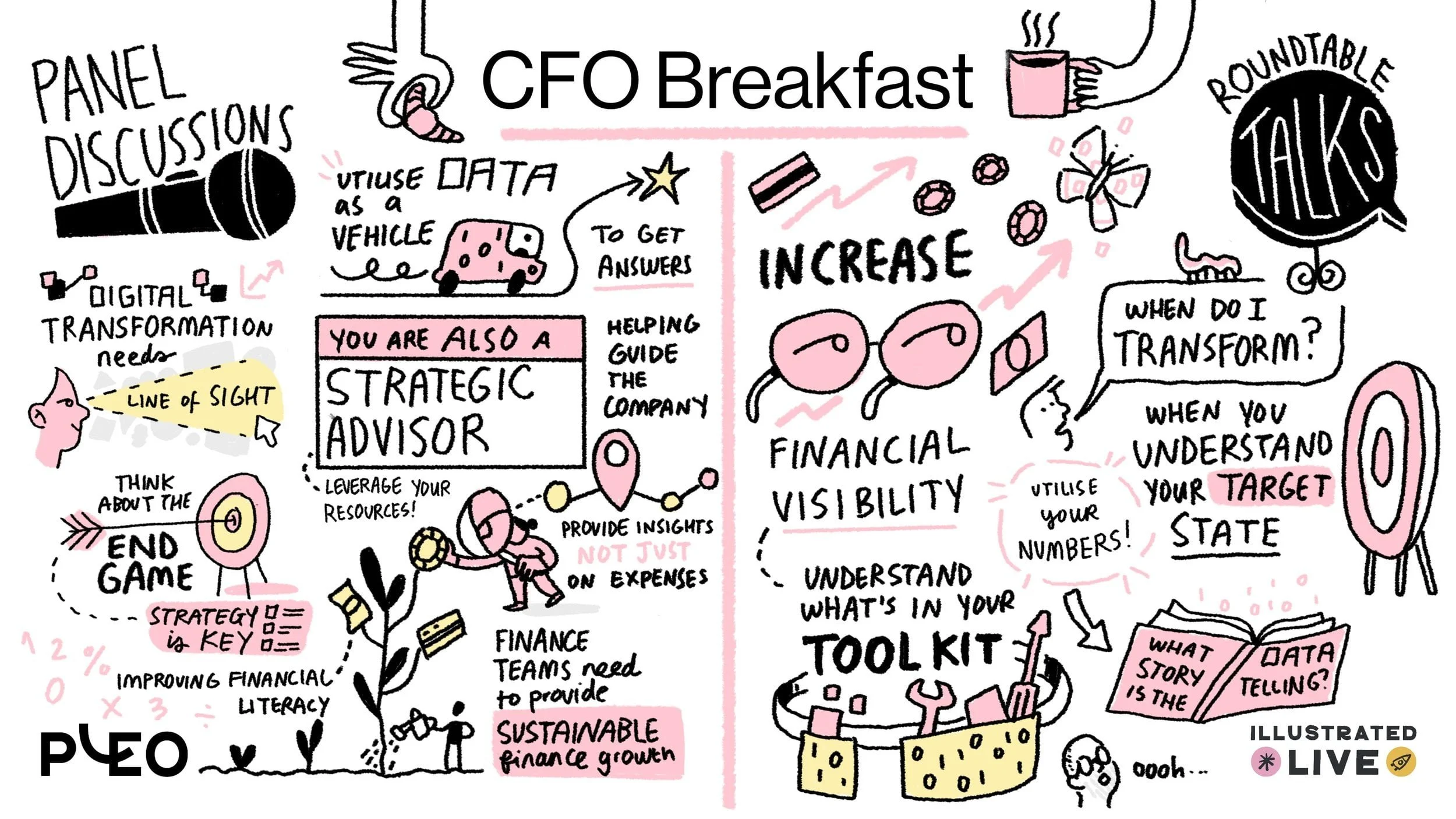
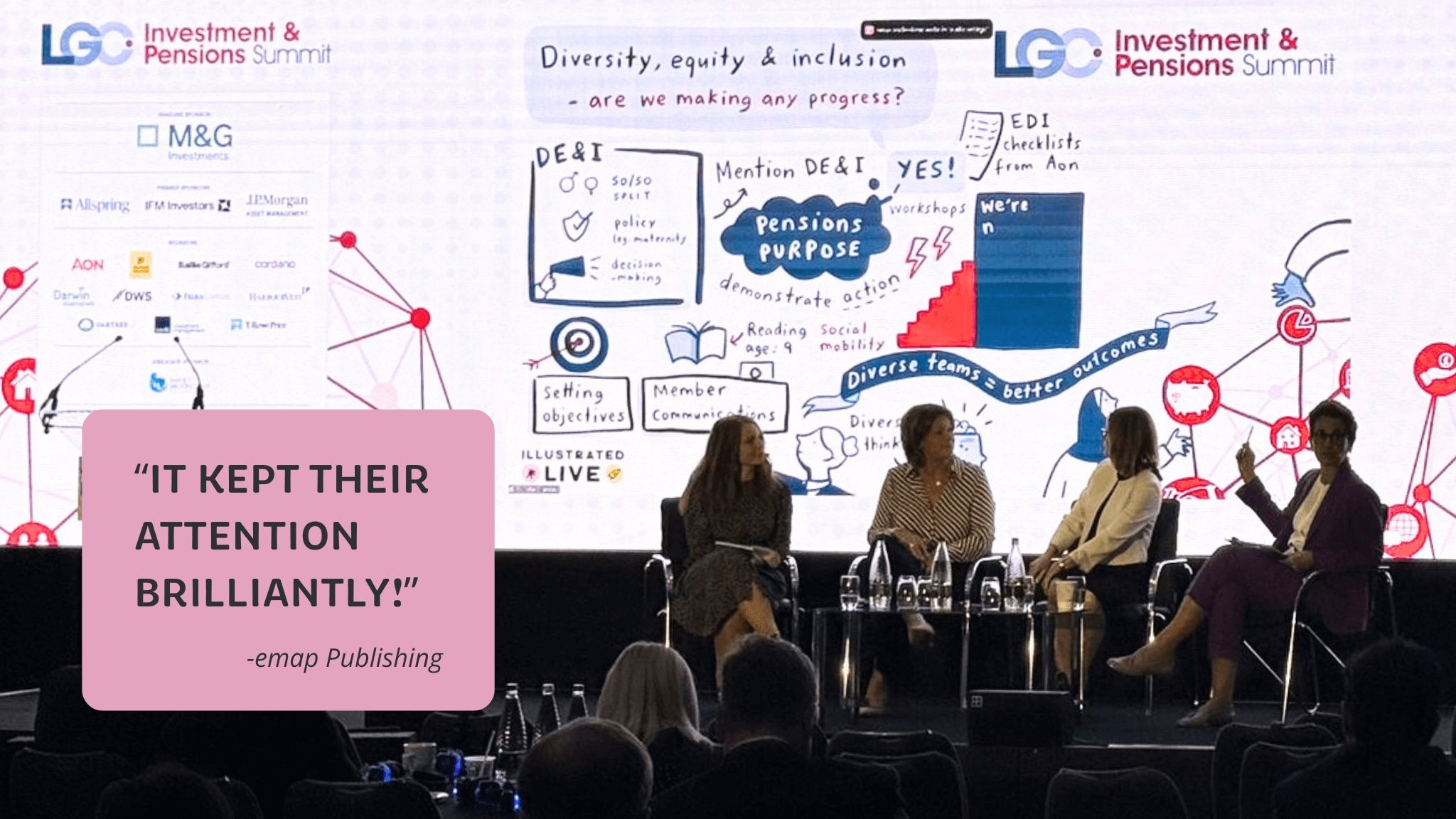


Examples of live illustrations created for conferences, strategy sessions and workshops.
Final thought
The best live illustration projects happen when organisers think beyond “that will look nice”.
The real magic is when the artwork becomes something people return to again and again. A visual summary of ideas, decisions, and conversations that might otherwise be lost in pages of notes.
And yes… watching someone draw live is still very cool. 🤪
FAQs
-
Remote event illustration starts at £750 + VAT
In-person events start at £1500 + VAT for a half-day
Multi-day conferences will have a discount applied, and are usually in the £5k + range
-
I’ve written a whooole big article about that. If you CBA to read, here’s a short snippet: Geographic differences:
UK tends to use "visual" - visual recording, visual facilitation
US tends to use "graphic" - graphic recording, graphic facilitation
Other terms you'll encounter:
Scribing - generally means graphic recording (common in the MG Taylor tradition)
Live illustration - graphic recording with emphasis on the illustrative style
Visual note-taking - can mean professional graphic recording or personal sketchnoting
Sketchnoting - usually personal visual notes, popularised by Mike Rohde
Read the full article on the difference between graphic recording and live illustration here!
-
Every illustrator is different. At Illustrated Live we’re typically booked at least a month or two in advance, so the earlier the better.
Right now (March 2026) I’m fully booked up until June.
I’ve a network of brilliant illustrators to recommend, so even if it’s last minute you can get in touch (hello@katiechappell.com) and I’ll do my best to help you find the perfect illustrator for your event or project.
-
Short answer: YES!! I got completely obsessed with live illustrating at online events during lockdown. You can read all about virtual event visual notes experience here.
-
That would be nice :) Send me an email and I’ll check my diary.
Thanks for reading!
If you have any other questions about live illustration or hiring an illustrator for your in person or online event, you know where I am.
x Katie